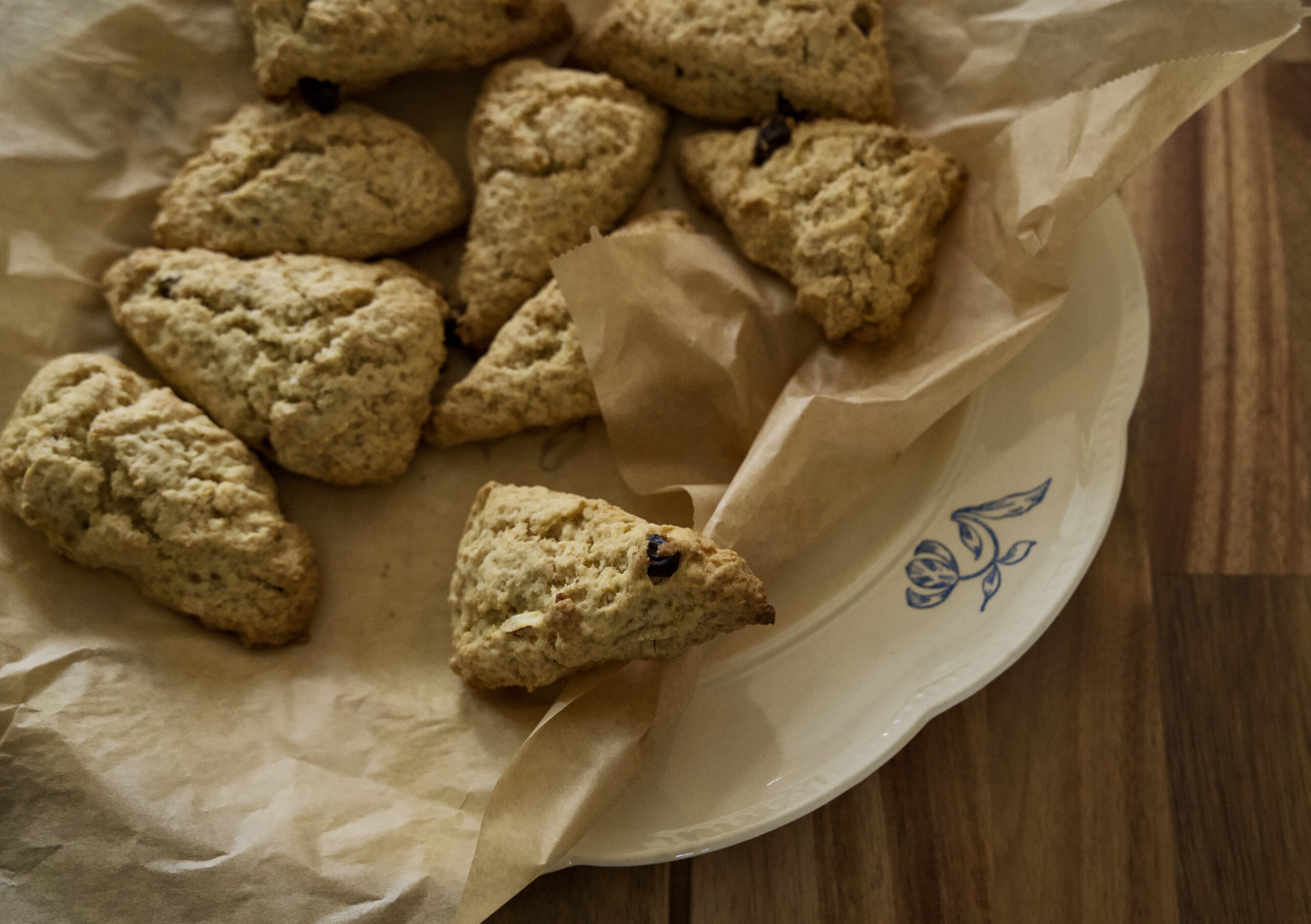
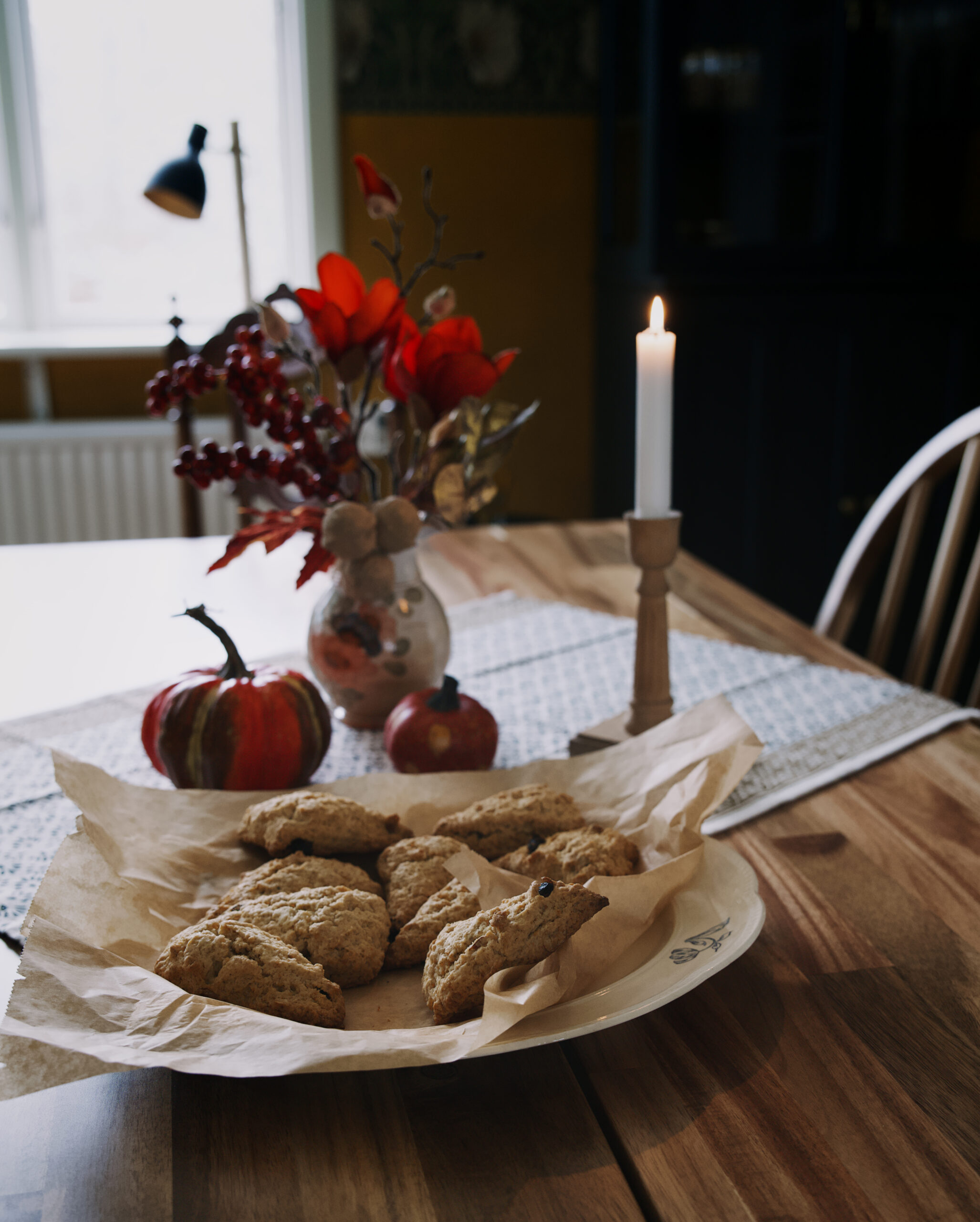
Last week, I found myself reminiscing about the cozy mornings I used to spend with my family during the holidays. To recreate that warmth, I decided to bake some scones (a no-fail cure to all winter blues), hoping that they would capture the essence of those festive gatherings. The combination of orange peel and clove brought a warm, aromatic touch to my kitchen, instantly evoking memories of bubbly yuletide dazzle. Perfectly spiced and subtly sweet, these scones turned out to be a real treat for the senses.
I gathered a blend of simple plant-based ingredients,
…excited to see how they would come together. The orange peel added a zesty brightness, while the cloves provided a hint of spice that beautifully complemented the citrus notes. They seemed perfect for a brunch or as an afternoon snack with a steaming cup of coffee… Proper Swedish fika style. I was so pleased with the results that I invited a neighbor over for a cup and a scone. She came and voraciously ate two and took some more to go.
In my recipe, I used sultanas because they were what I had on hand, though I imagine they would taste just as delightful with black currants or dried mulberries. The scones were surprisingly easy to make, and I enjoyed them fresh out of the oven. I also saved some to share with more neighbors, knowing they would keep well in a tin for four days. By the fifth day, they were a bit stale, but I found a solution—breaking them up into a bowl of milk as an alternative to my morning cereal gave me another chance to savor their delightful flavors.
Prep Time: 20 min | Bake Time: 15-18 min | Makes 8 Medium-sized Scones
Ingredients
- 2 ½ c all-purpose flour
- ½ c granulated sugar
- 1 stick of plant-based butter, cold
- 1 c cold plant-based milk
- zest of 2 small oranges
- ⅓ c sultanas
- ⅓ c chopped sweet almonds
- 2 tsp baking powder
- 2 tsp ground dried orange peel
- 1 tsp ground clove
- ½ tsp salt
Method
In a large mixing bowl, put flour, sugar, salt, ground spices, grated orange zest, and baking powder. Combine the ingredients with a wooden spoon until thoroughly blended. Then add the sultanas and chopped almonds and stir.
Cut in the cold butter in small cubes. With your fingers, rub the butter into the flour to obtain a crumbly mixture. The pieces of butter should be reduced down to roughly the size of a pea.
Add the milk to the dry ingredients, then mix with a wooden spoon to form a rough dough. With your hands, bring the dough together without overmixing.
Tip the dough onto a floured workbench and knead 5 or 6 times until the dough comes together into a malleable and slightly wet block. You should have a rough, uneven dough with ingredients that are evenly distributed throughout.
Preheat the oven to 400° F.
Shape the dough into a flattened block about 12” long, 4” wide, and 2” thick and cut into desired shapes. The dough mix should give you 8 pieces of scones total. If making larger or smaller scones, adjust the bake time accordingly.
Transfer scones onto a cookie sheet and bake for 14-15 minutes, or until slightly golden on top. The inside should remain fluffy, so careful not to overbake them.
Enjoy warm with a cup of coffee or cold with milk.
EXTRAS AND TIPS
There are two fundamental aspects required to achieve the perfect vegan scones, particularly when using ingredients with less fat content (such as plant-based butters and beverages): 1. how and for how long you work the dough, and 2. the temperature and length of the bake.
The dough will be a bit wet and sticky when coming out of the mixing bowl, and that’s exactly what you want. It is so tempting to add extra flour to help you in the kneading, shaping and cutting of the scones, but please do resist the temptation. You can dust some flour on your workbench before you turn the dough, but I highly recommend you use a dull knife or stainless steel scraper to assist while working the dough. Reduce the kneading to a bare minimum – if you work it for too long, the scones will become too rubbery and even worse DRY.
Precision baking is also a prerequisite for successful scones. Ensure that the oven has reached the desired temperature before inserting the dough. You want to bake at a higher temperature than you would normally use for cookies, brownies, or cakes, because the heat needs to crystalize the sugar on the surface of the scones while slowly melting the fat contained in the inner dough. Higher heat will ensure that the golden-brown outside and flaky inside characteristic of a good scone will be achieved.
Be mindful that baking on an oven rack that is too high or too low may also affect the bake. In other words, place the cookie sheet on the middle rack of your oven for a more even bake. Last, be mindful that if the vegan scones bake a few seconds too long, and they dry out to a sad point of non return. The taste will still be there, but the texture will be all wrong. Be around when the timer goes off to verify whether they should bake for an additional minute or be pulled out immediately.
With regards to cutting the scones, I usually do wedges, but you can use any type of shape or cookie cutter, just don’t forget to adjust the bake time depending on the size you choose to cut your scones. I don’t like to use a pan because the center always ends up being under-baked and too doughy compared to the rest of the bread.
Find out about Sensible Magazine, our indie slow living publication.
Click HERE to see what we’ve put together for your. May our work inspire you to seek beauty and peace in the small things that make life worth living.