Journeying abroad offers a wonderful opportunity to explore new places and cultures, while also trying new experiences that would otherwise go amiss in the comforts of our familiar landscapes. When I travel, I try to combine some outdoor activities with city sightseeing. By combining the two, I can enjoy the best of both worlds: the natural beauty of my surroundings and the vibrancy of urban life.
In the case of Bavaria, Munich acted as a gateway to the surrounding pre-alpine hiking trails and villages, serving as a remarkable cultural center with its baroque churches, parks, and plazas. The juxtaposition of nature and urban charm offered an enriching experience that catered to both my adventurous spirit and my curiosity for art and history.
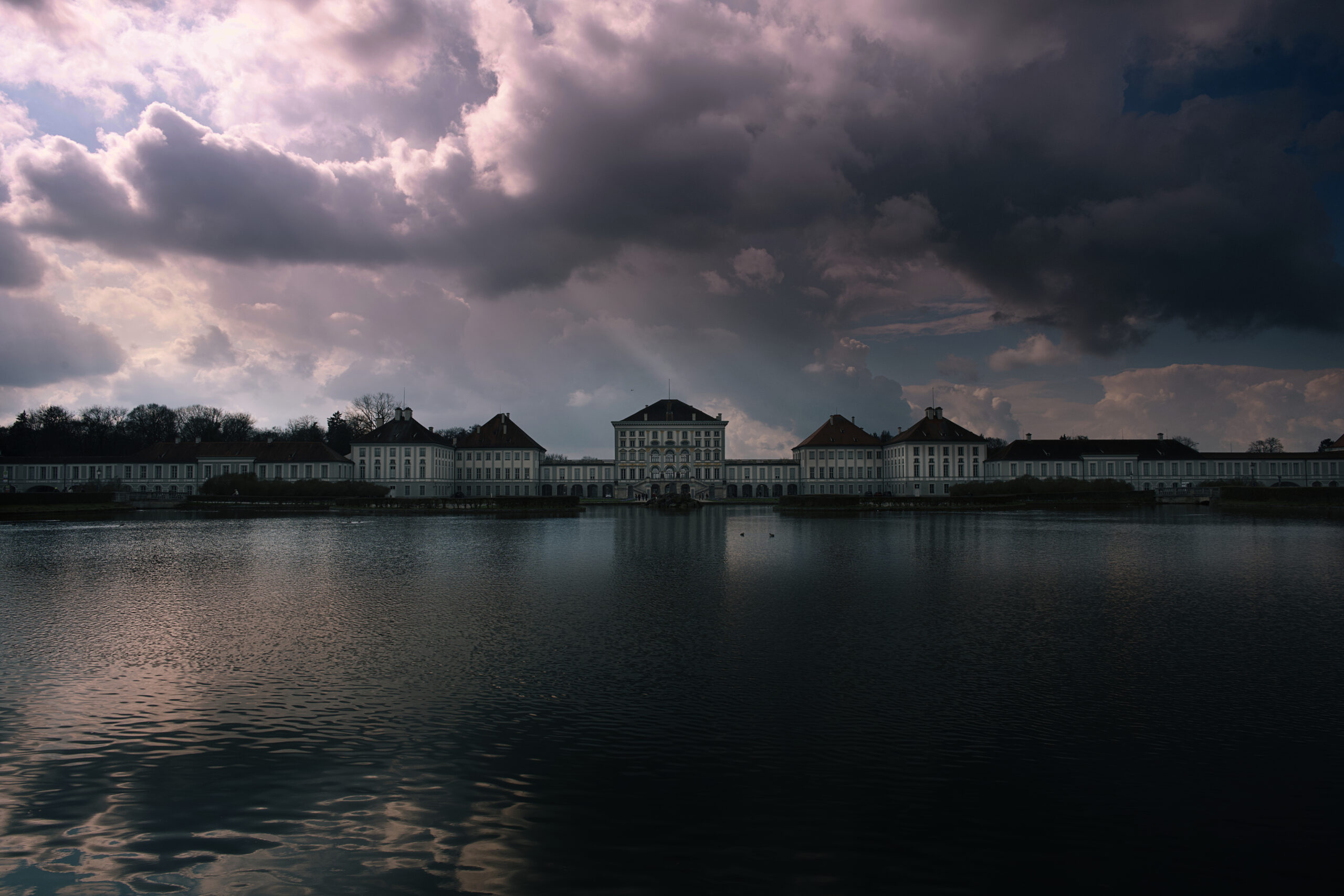
Among the best attractions that the city has to offer, for example Marienplatz, Frauenkirche, and Hofgarten, the Nymphenburg Palace is the place that made the urban stopover truly worth it. A remarkable Baroque creation, the palace symbolizes the splendor, opulence, and luxury of Bavaria’s royal heritage. As one of Europe’s largest royal palaces, Nymphenburg is a significant historical site and cultural treasure that exemplifies the pinnacle of Baroque architecture and design.
A Few Words about the Region’s History
Before joining the modern German state, Bavaria existed as an independent kingdom. It achieved its status in 1806 under the leadership of the Maximilian I Joseph. The monarchy continued until 1918, when it was dissolved at the end of World War I. The former royal family, the House of Wittelsbach, remains one of Europe’s oldest noble families and continues to have a presence in the region. Throughout its history, the Kingdom of Bavaria was influential in European politics, and its legacy can still be seen today in Bavaria’s unique cultural identity, with its peculiar dialect, distinctive cuisine, and majority catholic population.
The Palace’s Evolution
The origins of Nymphenburg Palace trace back to 1664, when it was commissioned by Elector Ferdinand Maria and his wife, Henriette Adelaide of Savoy, to celebrate the birth of their long-awaited heir, Maximilian II Emanuel. Don’t worry if you’re not familiar with the term Elector – I wasn’t either before researching the region’s history. The Prince-Elector of the Electorate of Bavaria was the title that the head of the semi-independent state of Bavaria acquired upon ascending to the throne. The Electors were bestowed the privilege to vote for the Holy Roman Emperor, so this title was a pretty big deal.
back at the palace… Italian architect Agostino Barelli initially designed this grand royal residence. Through the centuries, the palace saw numerous expansions and enhancements by successive rulers. Elector Max Emanuel played a key role in transforming Nymphenburg into a grand estate that reflected his dynastic ambitions. Notable architects such as Enrico Zuccalli and Joseph Effner contributed to the palace’s evolution, incorporating French and Italian Baroque influences.
The Interiors
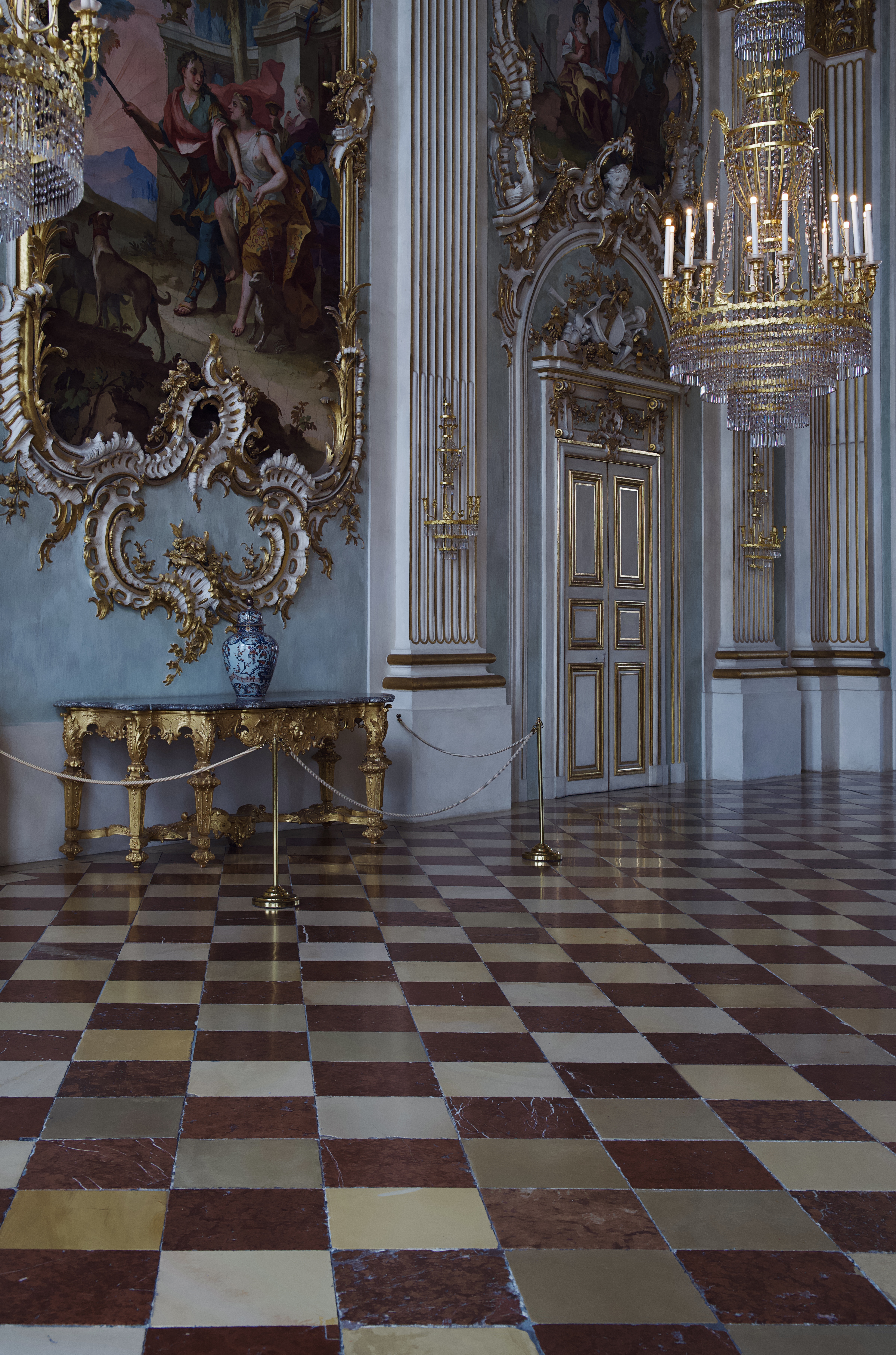
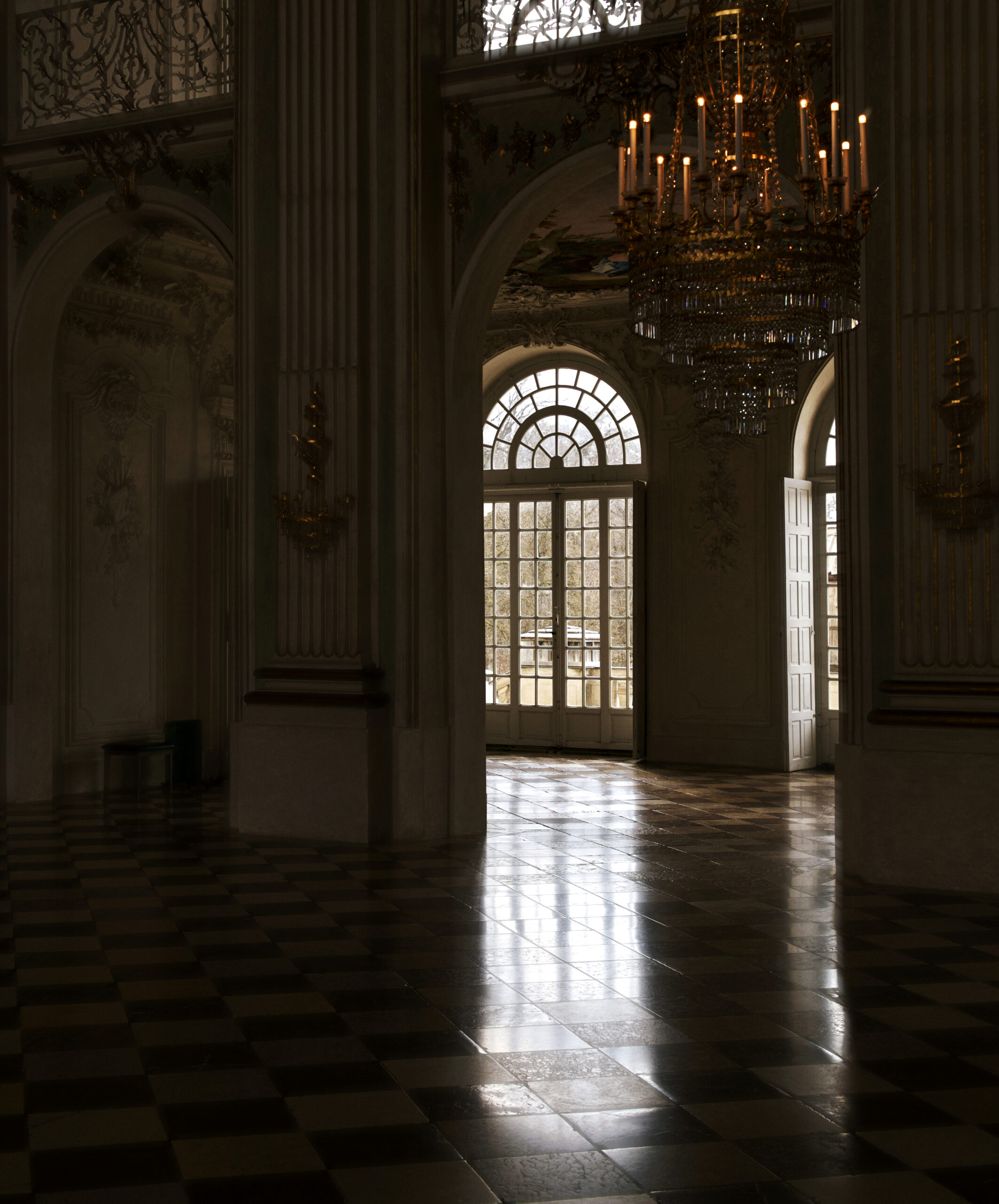
At the heart of Nymphenburg Palace lies the Central Pavilion, an elaborate structure decorated with elaborate stucco work and exquisite frescoes. The Great Hall, known as the Steinerner Saal, features a stunning ceiling fresco by Johann Baptist Zimmermann, portraying the Olympian gods and an allegorical depiction of Bavaria’s prosperity. Flanking the Central Pavilion are the North and South Wings, each containing numerous rooms and galleries. Noteworthy among them is the Gallery of Beauties, commissioned by King Ludwig I, displaying portraits of the era’s most beautiful women, painted by the renowned artist Joseph Karl Stieler.
What stood out the most to me was the minutia of the carvings and the myriad crystals hanging from the countless chandeliers and wall sconces. When the light shone in through the gallery windows, the crystals turned into disco balls. Each facet caught the light in a dazzling display, scattering it across the room in a dance of colors and reflections. It was as if the entire space had been transformed into a kaleidoscope, with rainbows shimmering on the walls and ceiling. The intricate carvings, each painstakingly detailed, seemed to come alive under this radiant glow. Visitors to the gallery, myself included, couldn’t help but pause in awe, marveling at the fusion of art and light that created an evanescent work of art.
Visit the photography shop to find the travelscape that speaks to you. Different sizes and formats to choose from are available. Need something custom-made? drop us an email at gloriap@apronandsuitcase.com
The Gardens and Park
As you approach the palace from the canal side on Ludwig-Ferdinand-Brücke, the trees lead you to the palace gates and sprawling outer gardens, with its bridges, waterways, and manicured flowerbeds. Upon entering the grounds, the lack of tall vegetation coupled with the ingenious canal layout, which runs perpendicular to the main attraction, inevitably draws your eye to the palace façade.
Initially laid out by Dominique Girard, a pupil of André Le Nôtre (the landscape architect who notably designed the royal grounds at Versailles, France) the gardens showcase a blend of formal French and English landscape styles. The two main feature of the park are the Nymphenburg Canal and the Grand Parterre: the former reflects the palace’s grandeur, endowed with numerous fountains scattered throughout its confines; the latter, with its meticulously maintained lawns and symmetrical flowerbeds, provides a picturesque view of the palace façade. Statues of Greek gods and goddesses enhance the parterre, adding a classical element to the elegant landscape.
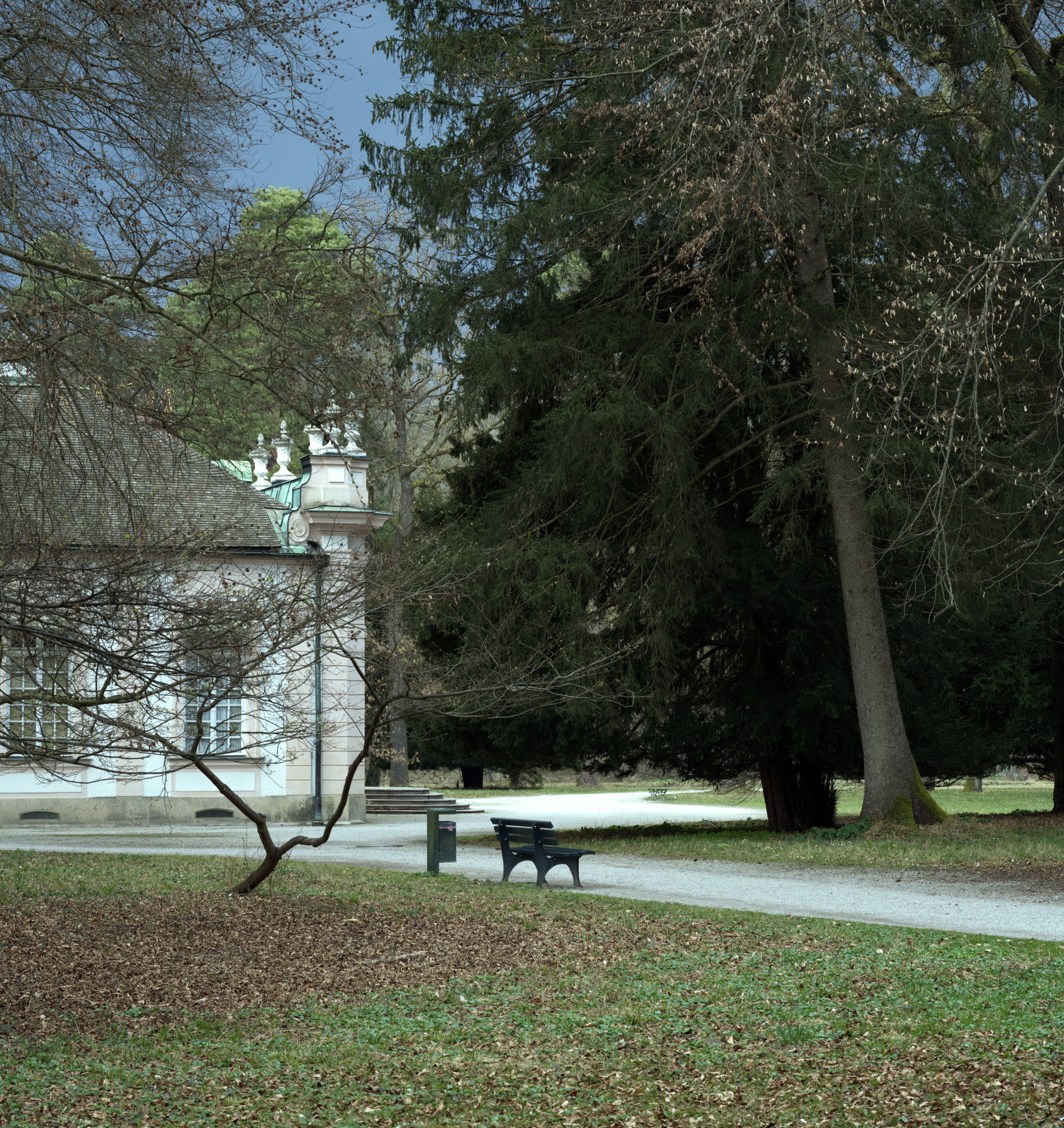
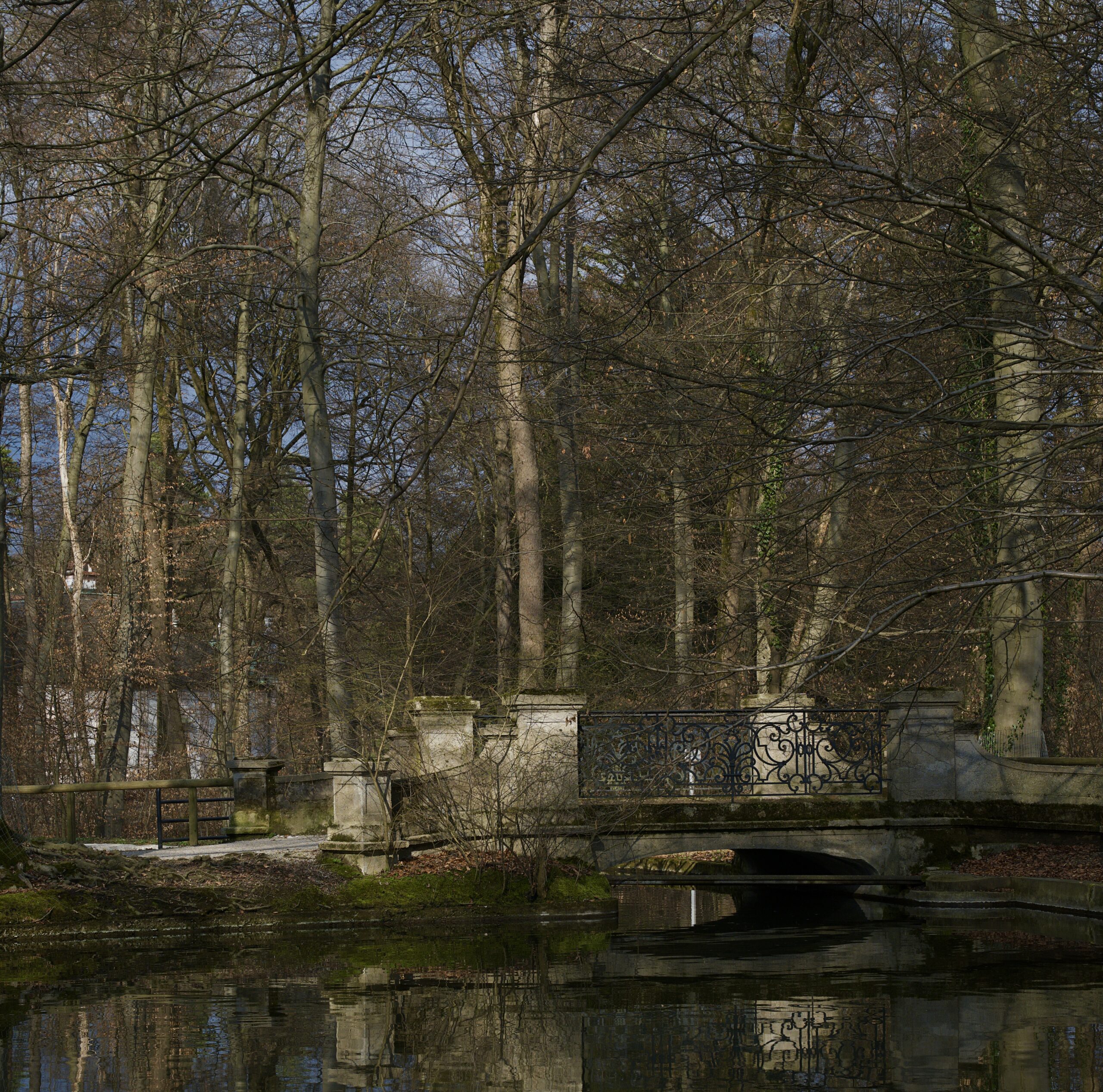
But… the park isn’t all manicured hedges and sculptured fountains, as its original creators intended it. There is an unkempt, wild side to the gardens, where crowds don’t seem to venture out much. In fact, in the early 19th century, garden designer Friedrich Ludwig von Sckell grew tired of the park’s rigidity and initiated a rewilding project of its land. He replaced the original symmetrical beds and hedged areas with a thoughtfully-arranged selection of trees and shrubs that were intended to grow naturally. Additionally, he introduced meadows, lakes, brooks, and small islets shaped in an irregular fashion to accompany the also irregular winding paths that cut across the palace’s estate.
Along one of these nondescript paths lies the Amalienburg, the most ridiculously adorned, sparkling clean hunting lodge the world has ever seen. Designed by Belgian-born François de Cuvilliés, this exquisite Rococo construction is famous for its Hall of Mirrors, an opulent space adorned with intricate gilding and mirror work that embodies 18th century way over-the-top luxury. I don’t have any images of the room’s interior, as it was closed when I visited. I managed to sneak a peek through the glass-paned door, but I didn’t have enough clearance to successfully snap a decent picture.
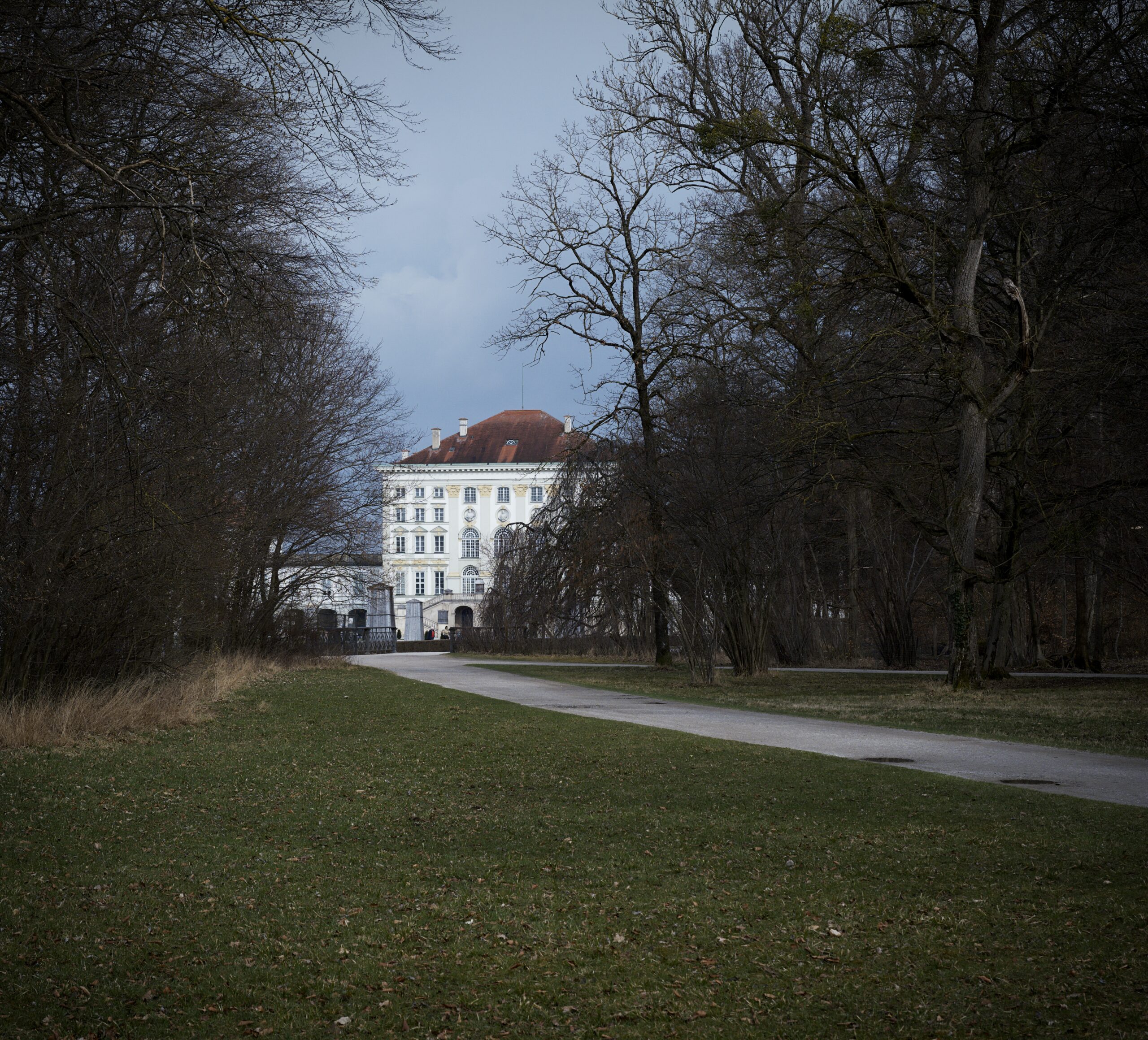
The expansive gardens and park surrounding Nymphenburg Palace are incredible, the perfect environment that makes you want to simply get lost as you meander through. I was there during a thunderstorm, which made the greenery look dramatic and ever so vibrant. The raindrops touched the leaves in a quick water drizzle as the rumble of thunder announced the menace to come. The air was rich with the scent of earth in early spring, invigorating the senses and clearing the mind.
As I wandered along the winding paths, small streams formed along the walkways, reflecting the sky’s tumultuous display of dark clouds and occasional flashes of lightning. Despite the weather, or perhaps because of it, the gardens felt alive, each plant and flower seeming to embrace the rain with open petals. It was a magical experience, as if nature itself was putting on a grand performance, leaving me in awe of its raw beauty and power.
Final Thoughts
No matter how stupendous the palace’s interior may have been, it paled in comparison to the neo-romantic beauty of the sprawling park grounds. Exploring this landscape felt like stepping into a scene from a Mary Shelley novel or becoming a speckle of paint in a Caspar David Friedrich tableau.
As the sun began to set, the rain stopped and the park transformed into a game of elongated shadows and golden light, casting an ethereal glow that seemed to suspend time. It was a place where imagination could roam free, where every turn around the bend of a lonely brook promised a new discovery, and where the soul could find solace and inspiration amidst the enchanting beauty of this supremely calm corner of the world.
Until we meet on the road again soon.
Yours truly,
G.