ANDALUSIA, the beating heart of Spain.
Passion, heat, and the art of enjoying life.
There is something sensual about this place. It could be the mirage that the water fountains create in the sweltering heat of day, the crystal-shaped drops of perspiration collecting onto a stranger’s forehead, or the desperate cry of a heartsick flamenco tune chanting of lost home and hopeless love. The striking voluptuous shapes of the arabesque architecture, which abounds in the region, is a legacy of Andalusia’s Moorish past as well as its living beats and rhythms. The interminable July days, when the sun never seems to set and seemingly never rises, make me want to write poetry about cities that are unknown and walk paths that lead to new forms of self expression.
Andalusia is vibrant, alive, hot, and flavorsome, a region to be sampled, bitten, and savored.
Follow along the photo essay to sense what I mean.
Must See in Seville
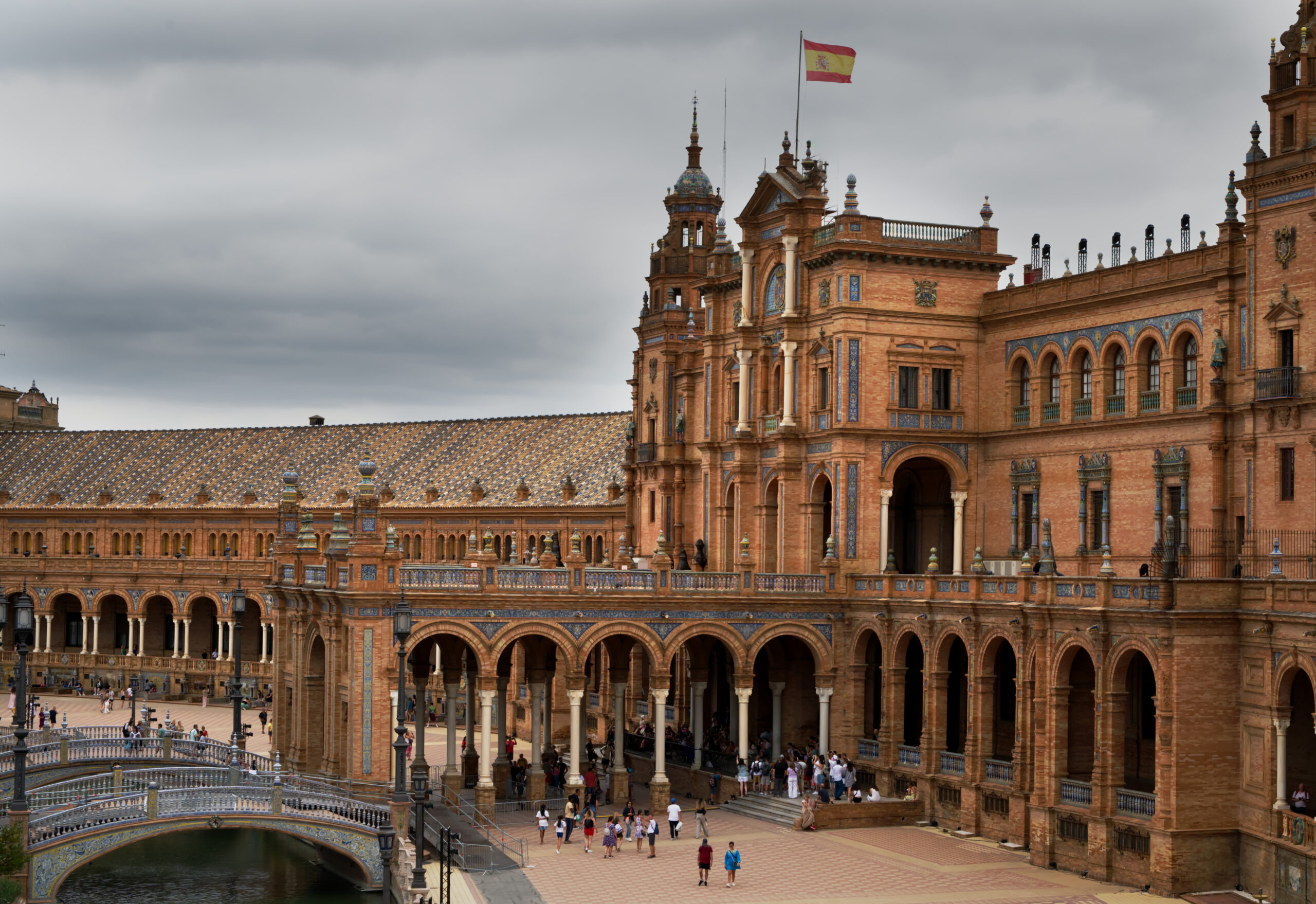
View of Plaza de España from the terrace, Seville.
Public gathering place with fountains and summer stage events. A unique construction with millions of majolica tiles clad the bridges, fountains, and friezes.
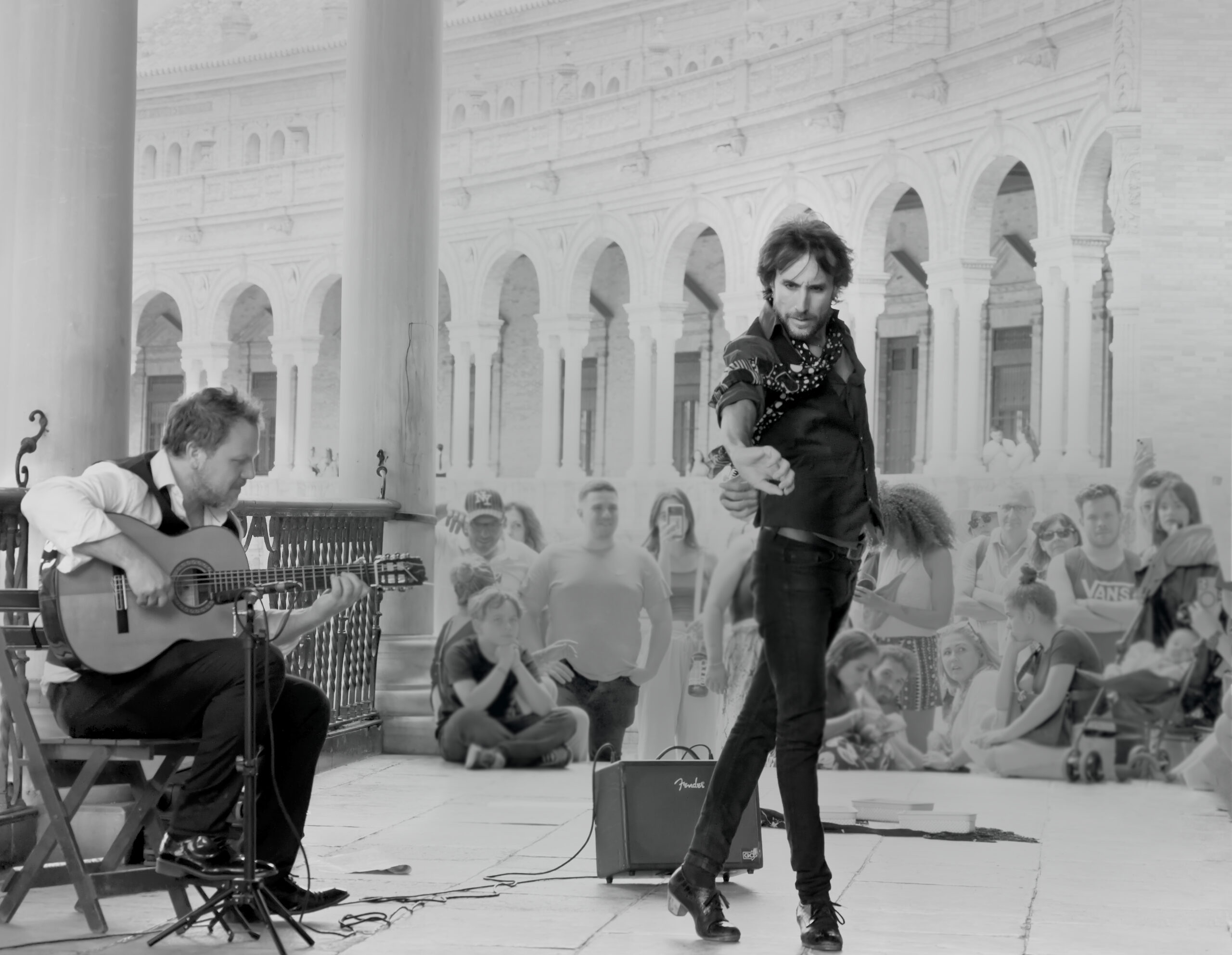
Flamenco artists and musicians in Plaza de España.
Performances may be seen throughout the city streets, park, and dedicated venues. The melancholy chords of the guitar that accompany the blazing voices of the singers and clicking heels of the dancers make for a enthralling experience out of time and place.
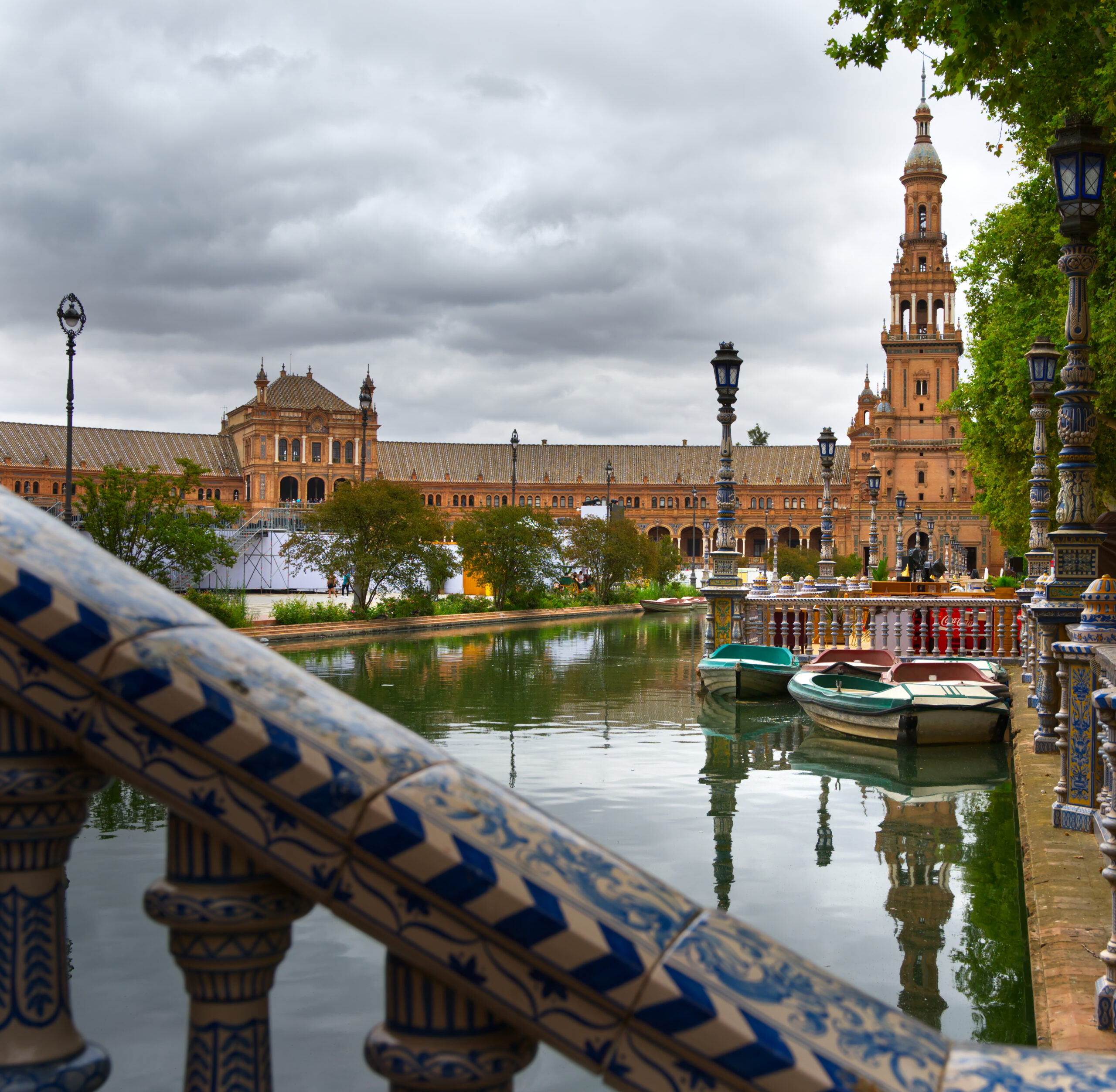
Plaza de España, view of the waterways that compose the arena. Here you can see in detail the ceramics cladding some of the elements that compose the square. A true monument of the fusion among the peoples that have inhabited the region for centuries.
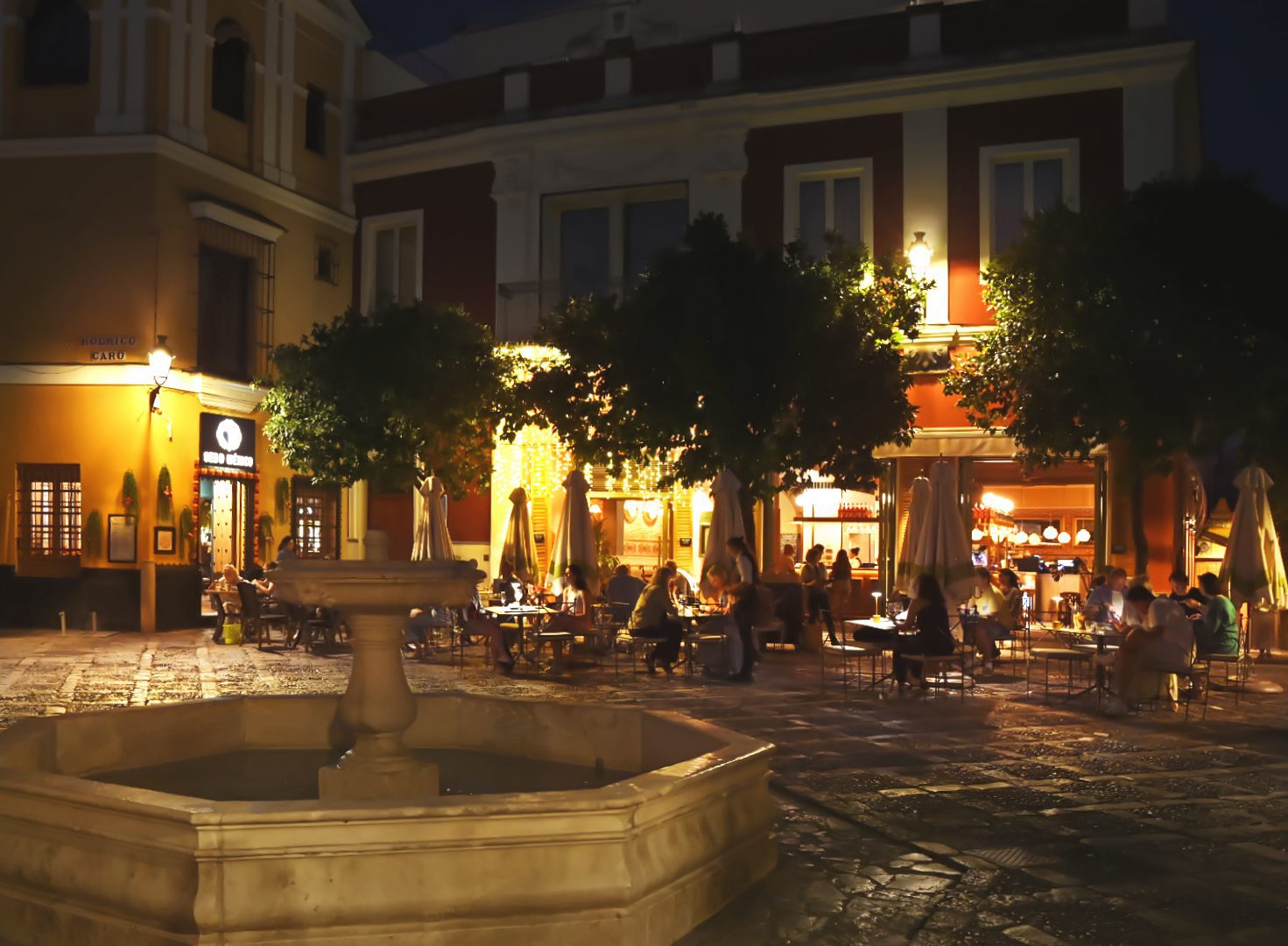
People enjoying life under the warm yellow light of the city streets.
The avenues of Seville can be treacherous; in fact, I could never find my way in or out. The city’s historic center consists of a labyrinthine agglomerate of small alleys, sharp corners, and hidden nooks and landmarks, and it is therefore difficult to trace one’s steps. Part of the magic lies in the getting lost in its meandering, tangled depths and re-emerging at the starting point. And then do it again.
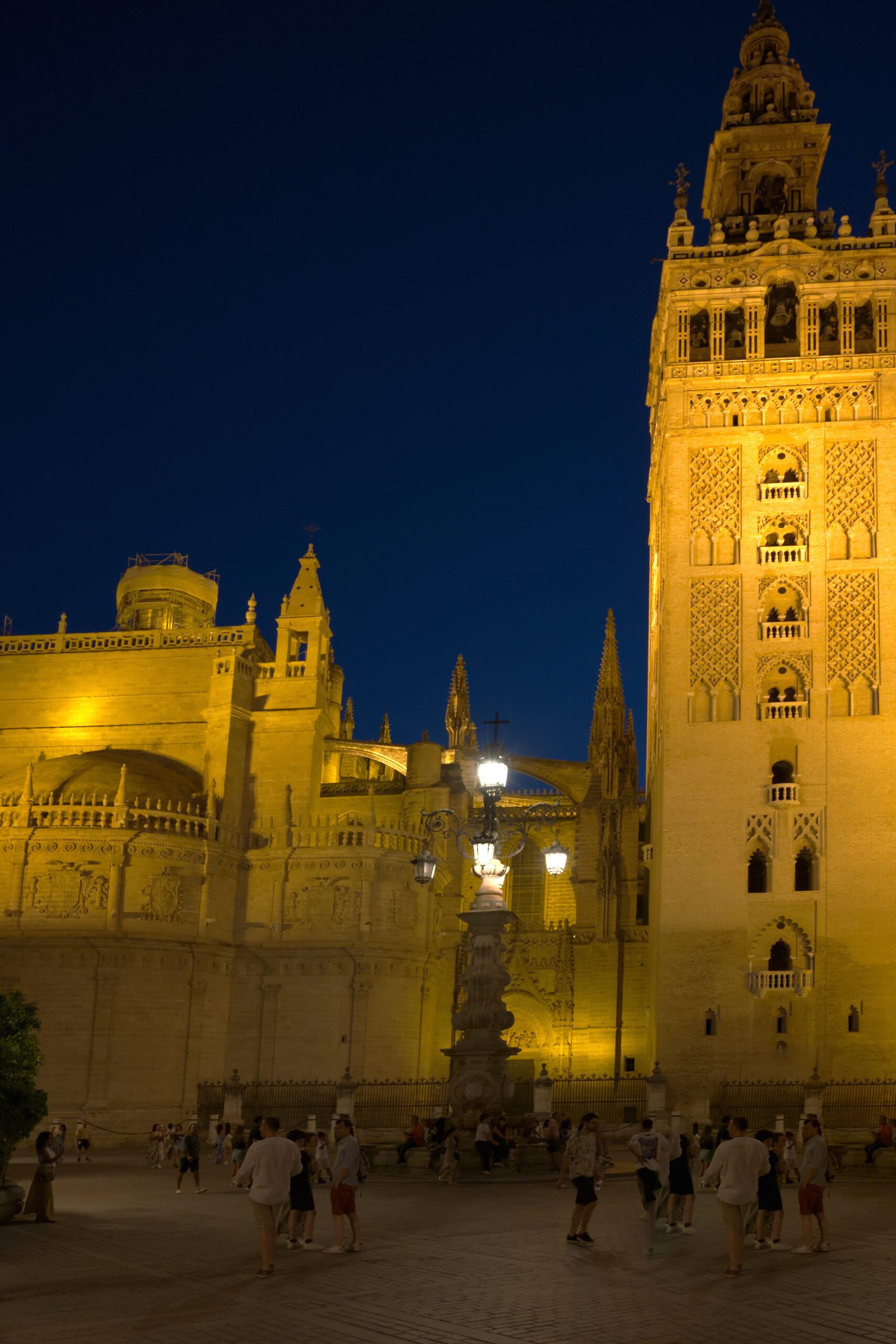
La Giralda, Seville.
Once again, the yellow lights and summer, cerulean night sky, when the sun sets around 10 pm. People flood the streets at sundown to grab a bite and socialize after spending the afternoon indoors where it’s cooler.
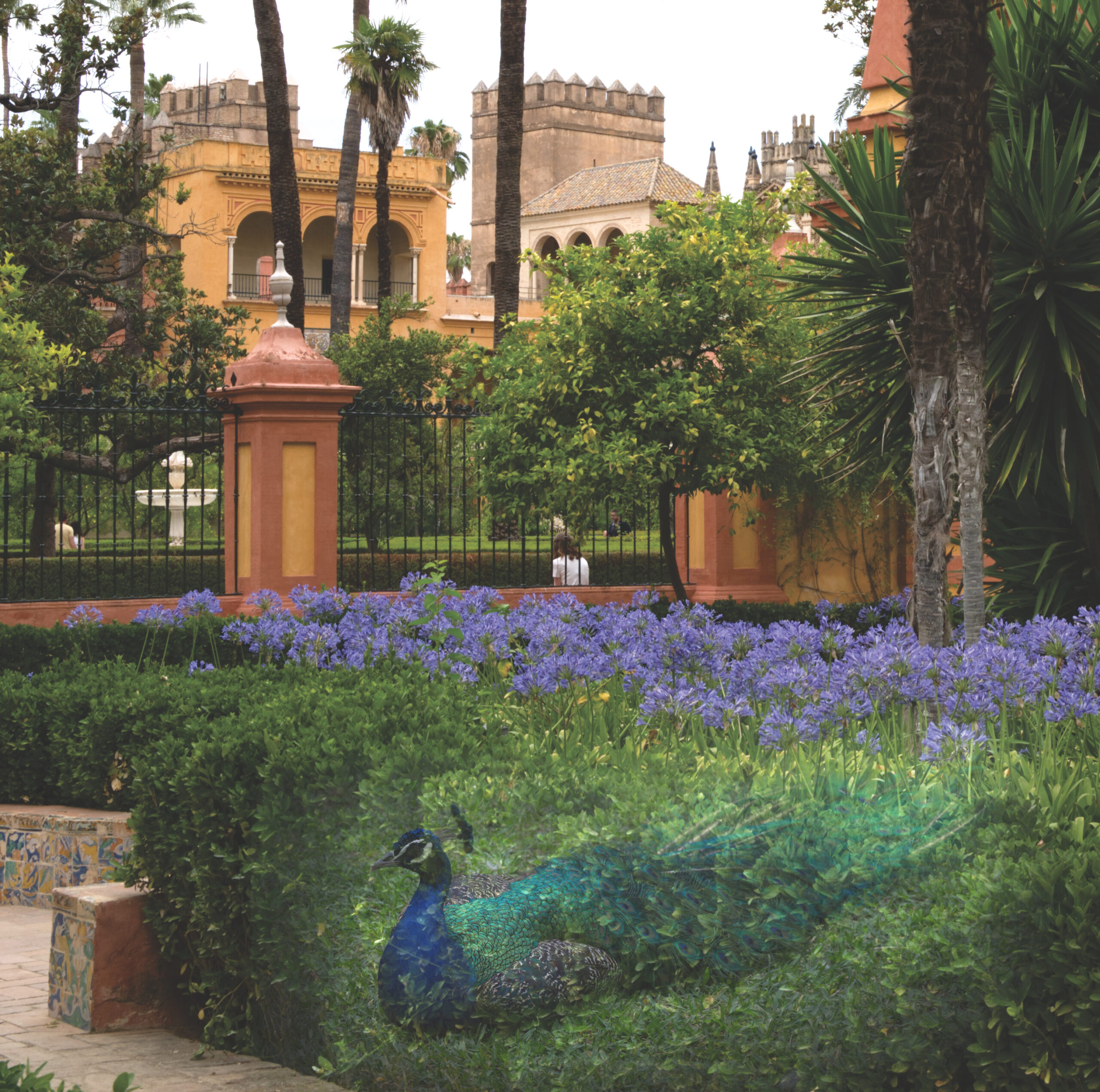
Must Visit – a Day trip
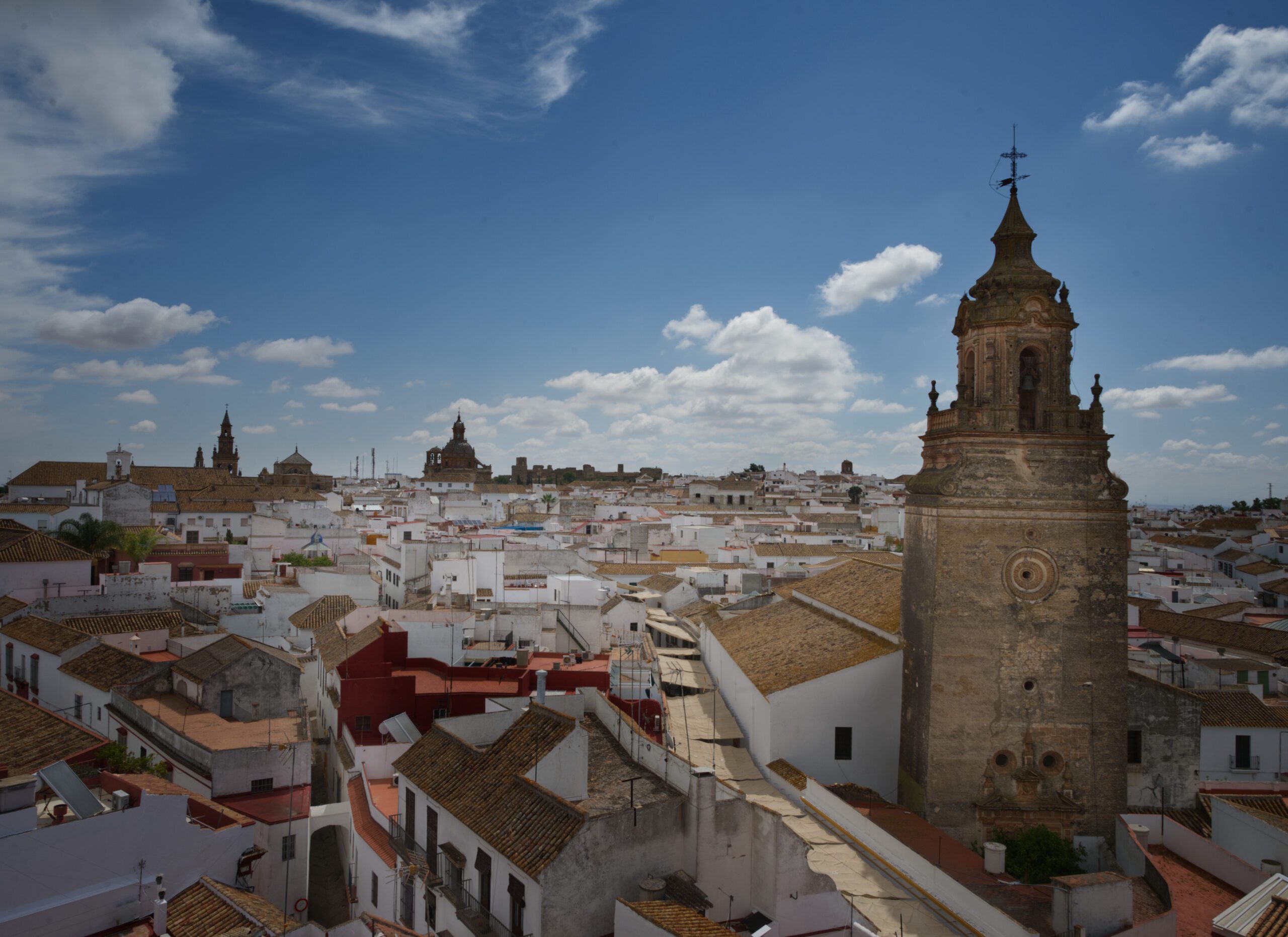
The whitewashed rooftops of the town of Carmona, 35 km (20 miles) outside of Seville.
An example of slow living and tradition within a day’s reach from the city. Here’s where you want to try the jamon Iberico (if you’re a meat eater) and Condado Viejo, a fortified Oloroso wine made from indigenous white grapes.
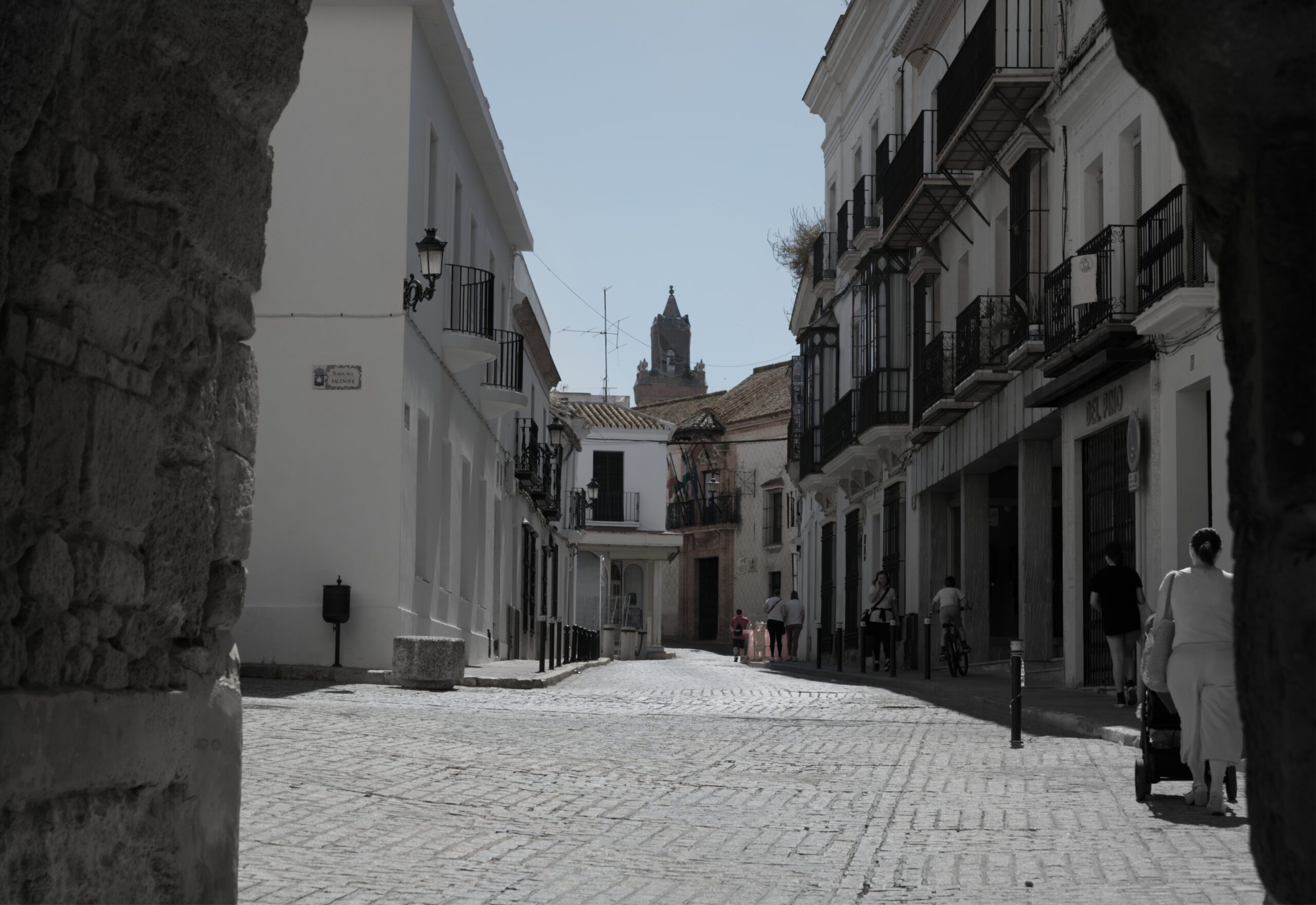
A faded shot of one of the central avenues of Carmona.
Shops and restaurants are closed during afternoon siesta. Activities resume later in the evening when temperatures are more amiable.
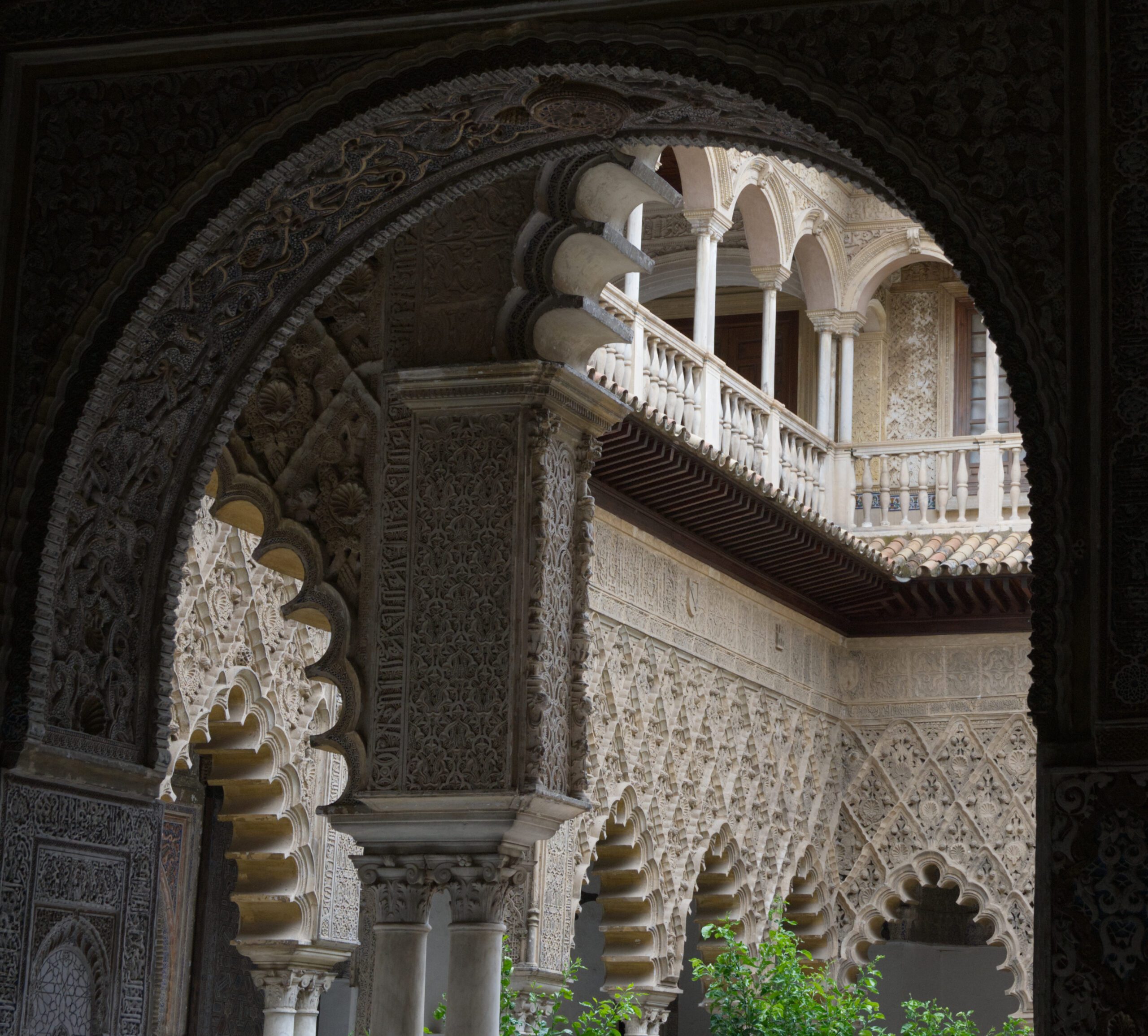
Must see in seville
Alcázar of Seville. The royal palace dating back to the XI century is a living testament of the Arab confluence in the region.
Find out more about the landmark here.
The blossoming gardens of the Alcázar of Seville.
Peacocks adorn grounds, while the sensual scents of bougainvillea and jasmine saturate the warm air. It’s an experiences that involves all the senses.
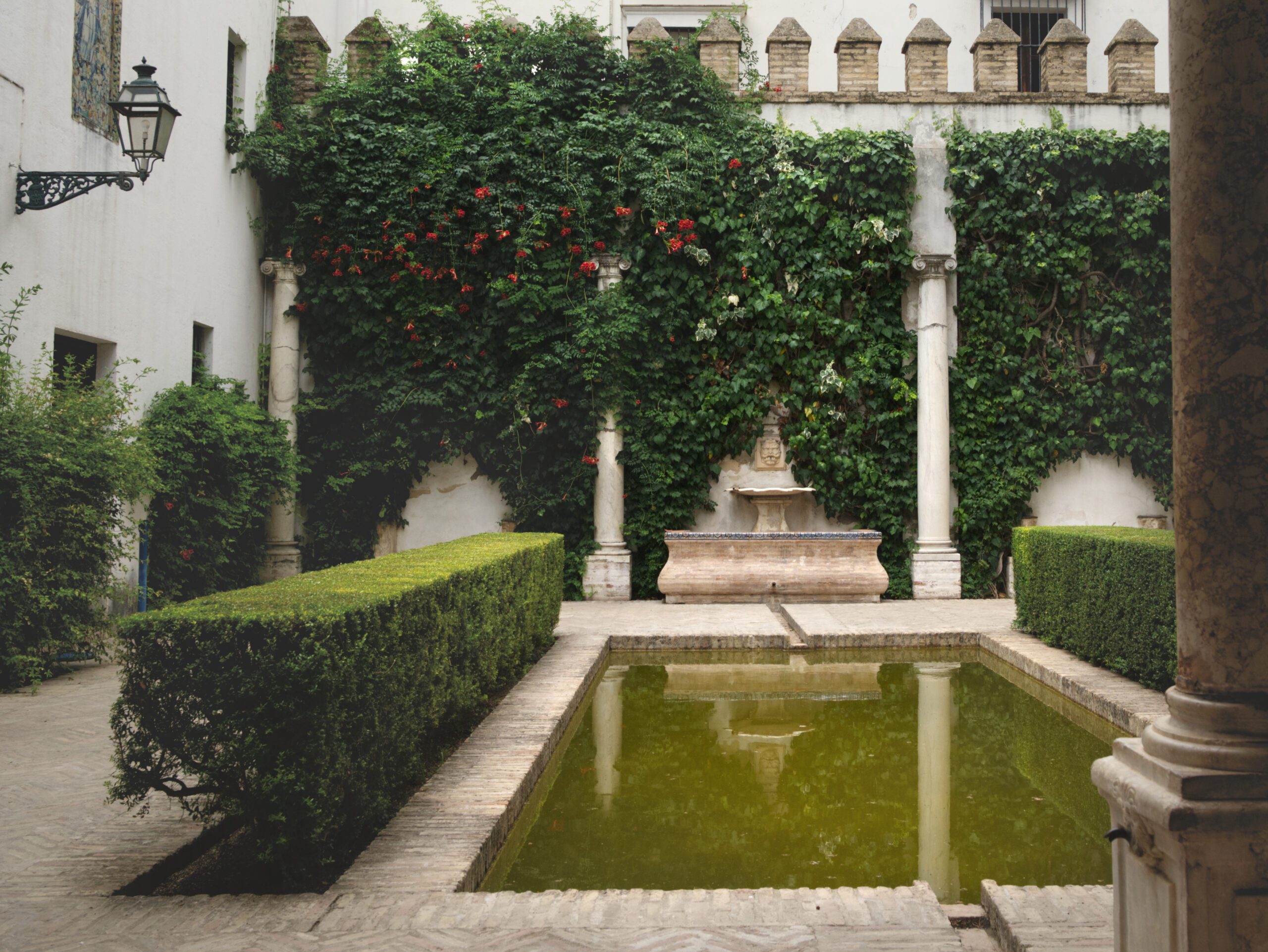
The inner courts of the Alcázar of Seville.
When you least expect it, pools and fountains turn up and create a dreamy atmosphere.
Must see in granada
Alhambra of Granada. One of the most famous examples of Moorish architecture that perfectly withstood the test of time.
Find out more about the Alhambra of Granada here.
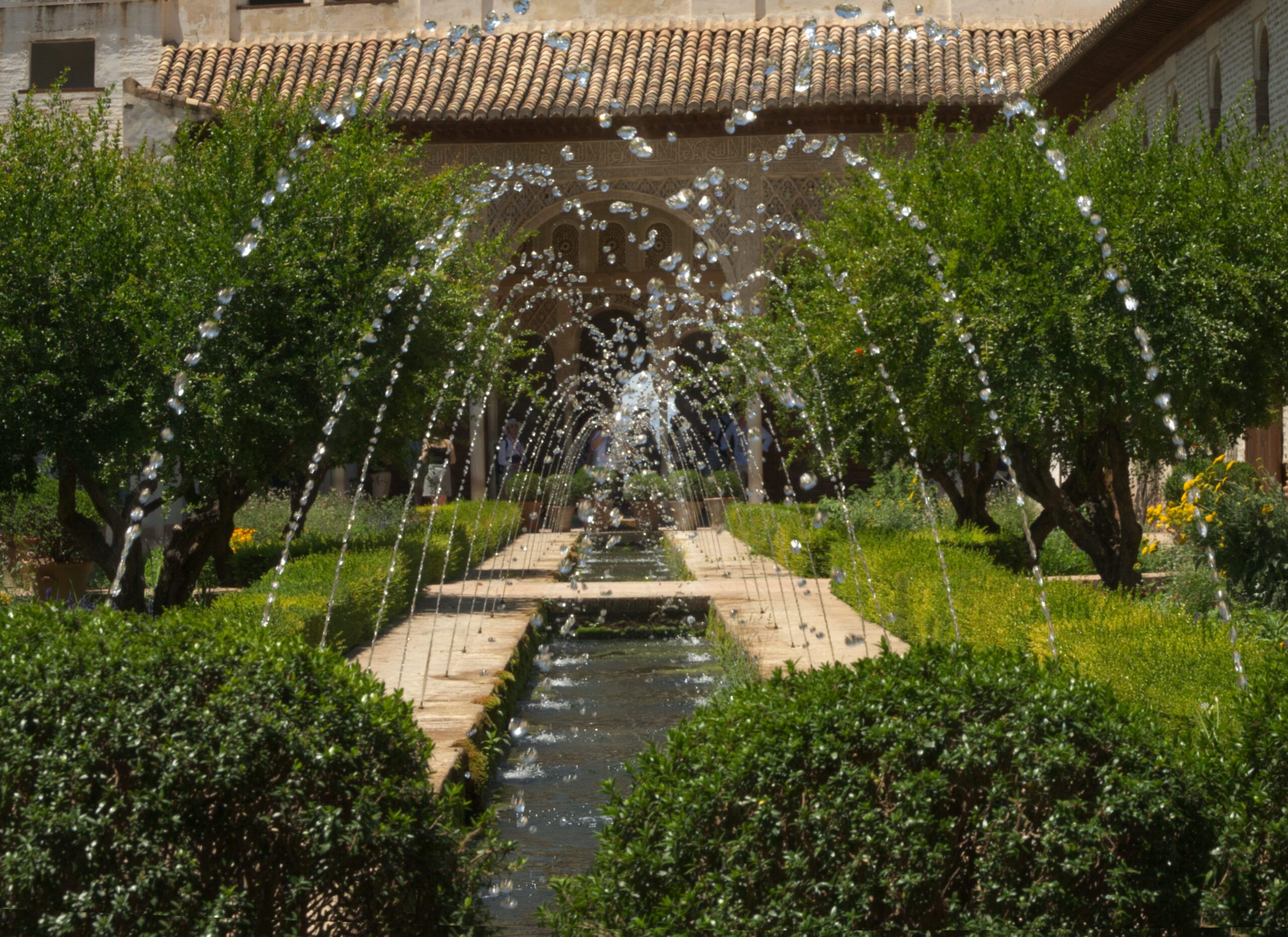
Alhambra of Granada, an exterior courtyard.
I love the way the water drop resemble jewels in the sun. A fraction of a second in suspension.
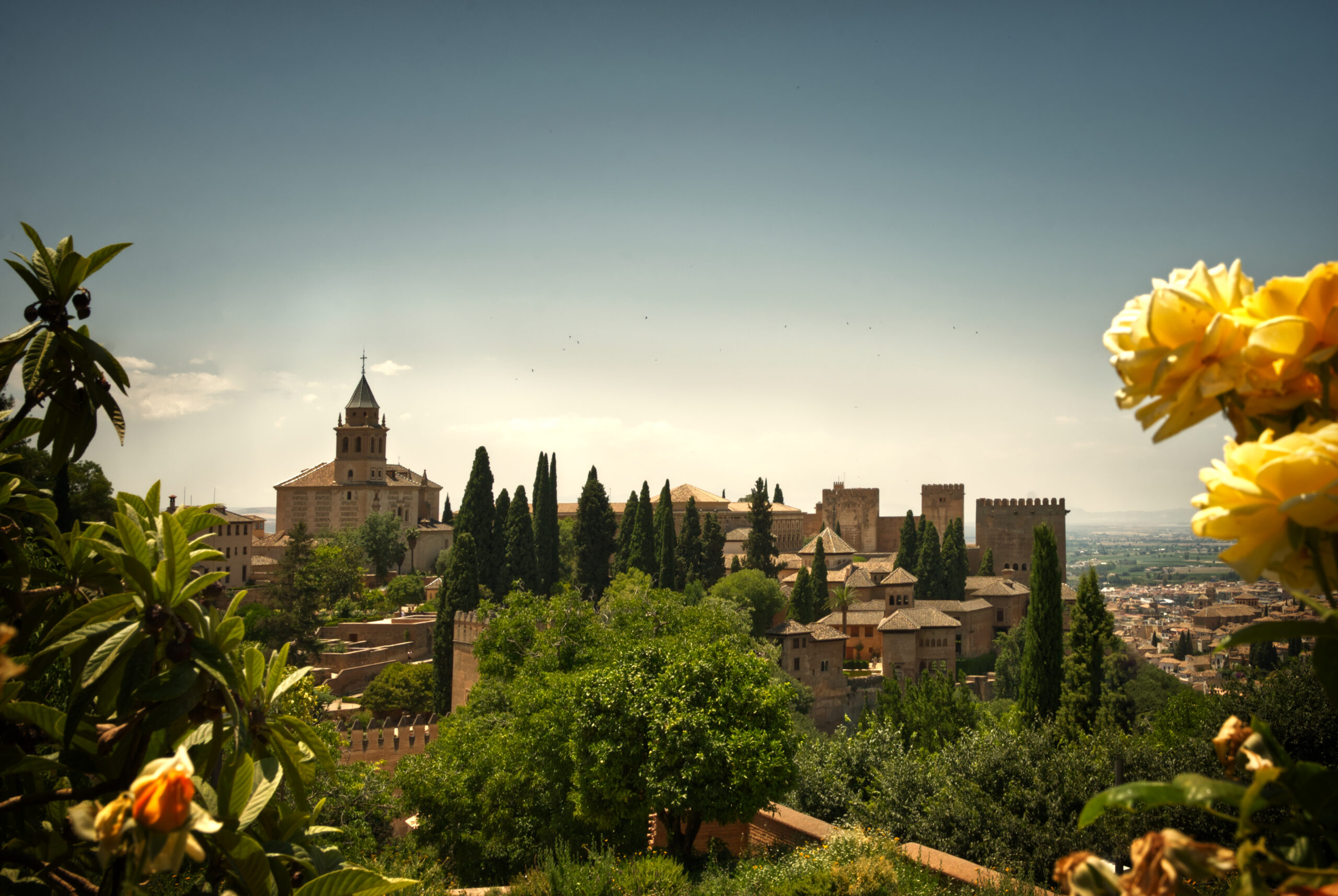
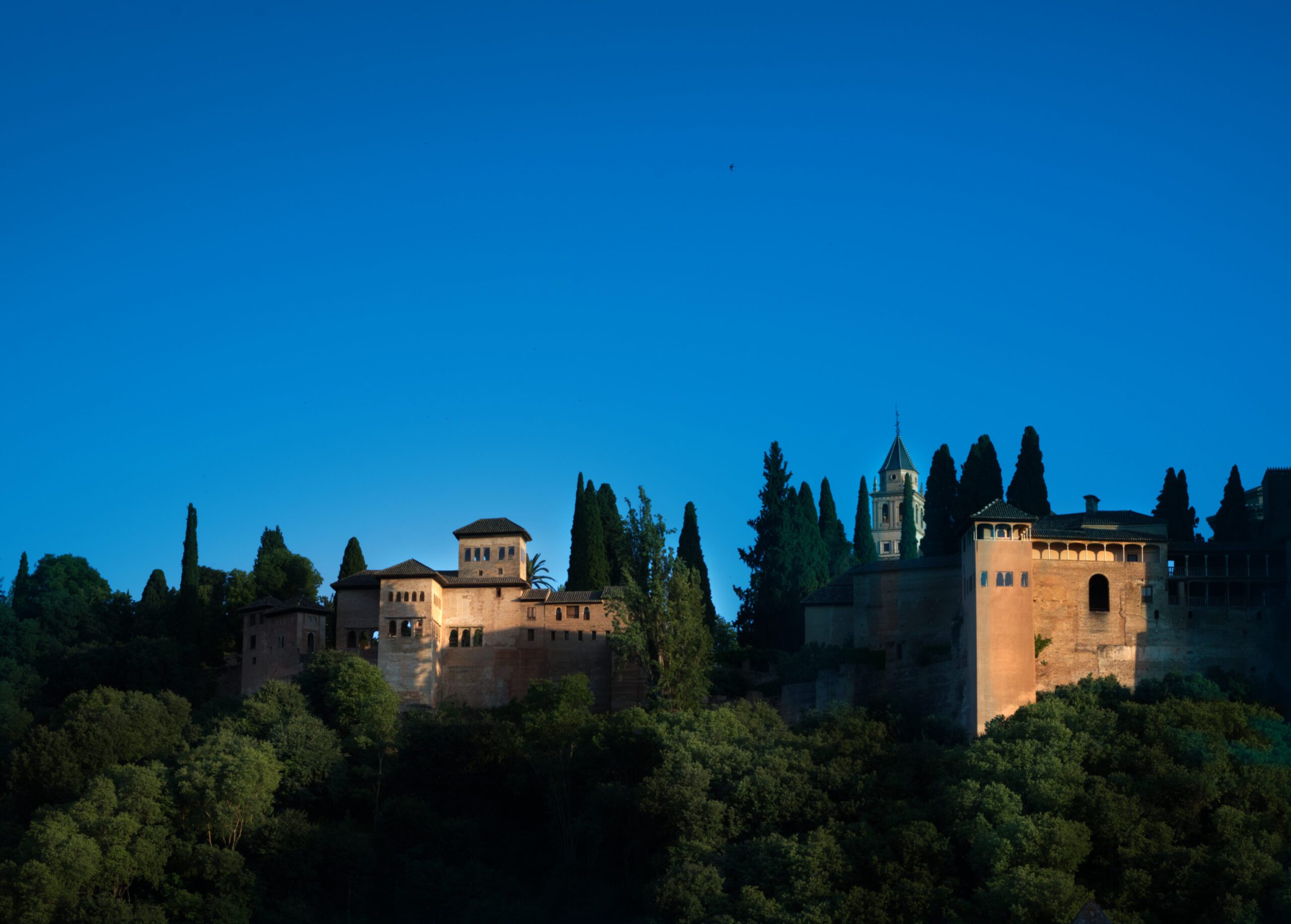
A view of the fortified Moorish citadel of Alhambra taken from the Partal Alto gardens.
Situated opposite the church, walls, and palaces, the Partal Alto is the best location to marvel at the scale of the Alhambra complex.
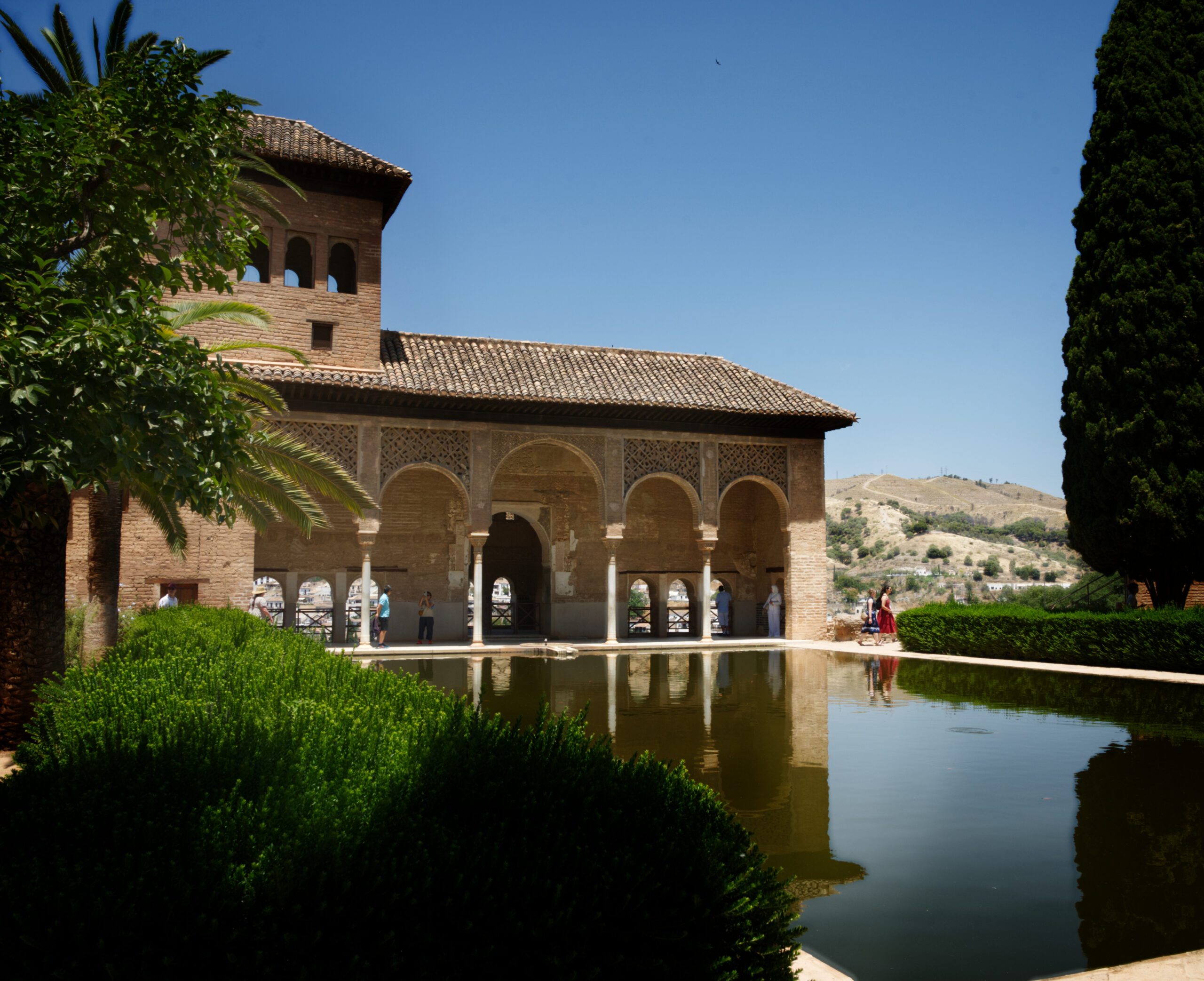
Interior courtyard of Alhambra, Granada.
Water serves a fundamental role in Islamic architecture, due to its association with Jannah (heaven), which the Qu’ran describes as a lush land where endless streams of water, milk, and honey flow.
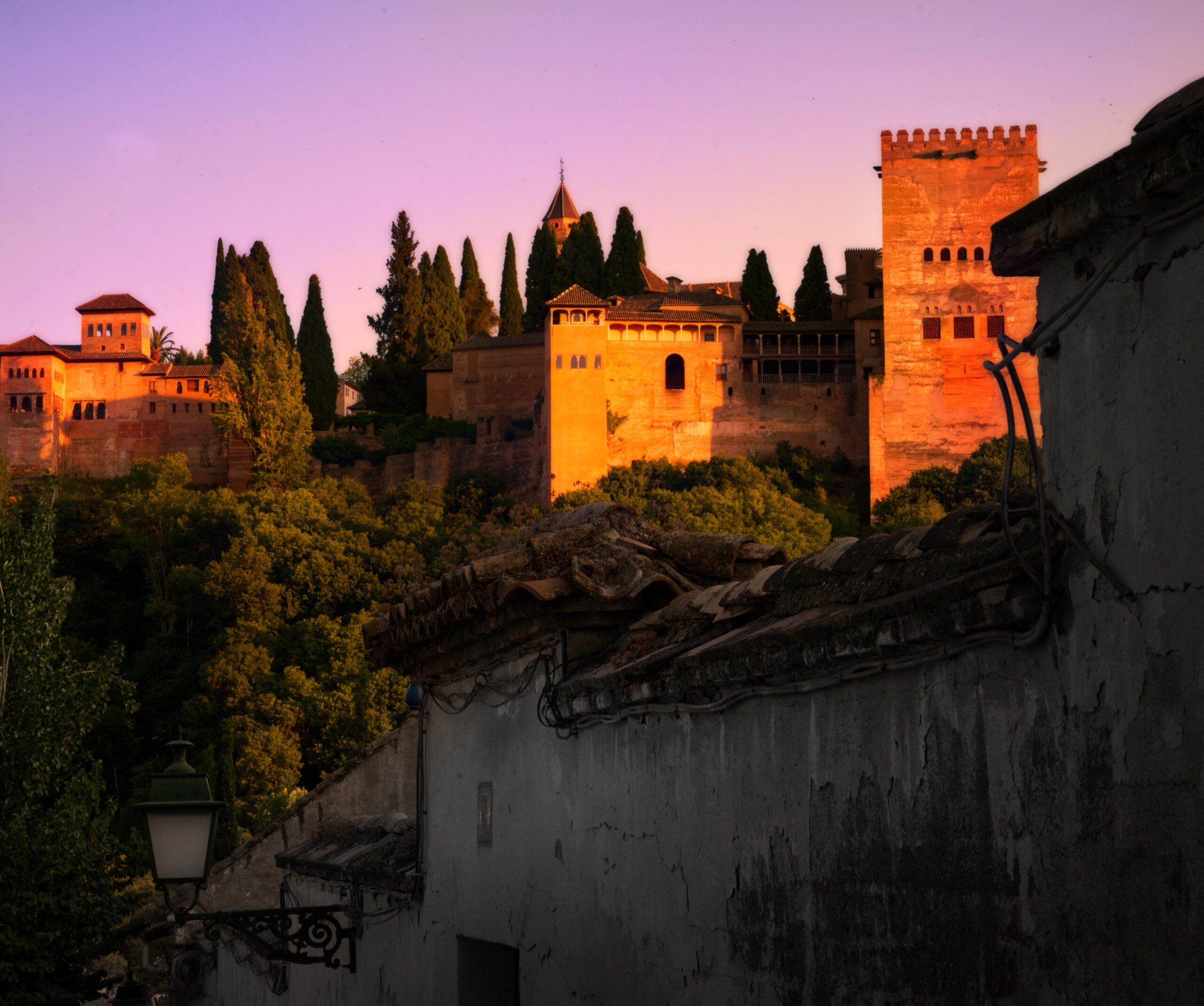
View of Alhambra at sunset from an alley in Albaicín, the high neighborhood.
The stone reflects golden and orange hues at the onset of dusk.
Thank you for journey with me along the beaten roads of Andalusia. If you haven’t done so yet, check out the fine art photo shop
and sign up for the FREE newsletter to receive discounts and exclusive bonus material. You can always get a hold of me on Instagram @apronandsuitcase_travel or via email at apronandsuitcase@gmail.com
Until we meet again on the road, soon…
Yours Truly,
G.